Monday, January 16, 2012

Santa Barbara: Monarch Butterfly Migration (part I); Egrets & Woodpeckers (part II)

SANTA BARBARA - PART I: MONARCH BUTTERFLIES

I found myself making a trip to Santa Barbara, California, to be with my father during a minor medical procedure.  This trip gave me a chance to refamiliarize myself with the species I knew when I was younger.  Being nearly 1300 miles (about 2000 km) south of Bellingham, Washington, I was suddenly seeing very different ecosystems: oak groves, coastal chaparral, and non-native shrubs and trees everywhere. The smells were different, too.  Instead of cedar, spruce, and fir, the aromas of coastal sage (Artemesia), Bay Laurel, and Eucalyptus were in the air.
   

     Near the Santa Barbara Airport, there is a marine, tidal estuary, or as the locals call it, a slough.  I like the Spanish world, estero, better.  There, I met Robert Funai, who is working on restoring the salt-loving herbs that grow by the 'lagunas'.  Rob works for a Santa Barbara based, ecosystem restoration group.  Here, he is pulling invasives from areas where the natives are just getting established.

I met two cyclists at this estuary who had just seen the winter migration grounds of the Monarch Butterfly.  When I had time, I went up the coast to Elwood to see the butterflies' winter home.  It is a eucalyptus grove on the bluffs above the Pacific Ocean.  Many Californians think that the eucalyptus is a native tree.  In reality, it was imported from Australia and planted to be a lumber crop and windrows for orchards.  It spread.  Now the Monarchs have found that some of these groves give them a perfect microclimate and shelter.  As the native California Live Oak (Quercus agrifolia) loses ground to development, the Monarch's have shifted to using this Australian transplant.  There are winter butterfly groves in Pacific Grove (Monterey), Elwood (Santa Barbara), and Ventura, California.


Entering this stand of Eucalyptus trees, I saw the Monarchs were clustered in masses of hundreds on the tree branches.  Their wings are folded up, so that the bright orange of the upper wings was mostly hidden.


Monarchs started to fly from their 'huddle', as the day warmed.  Here, you can see the bright orange of there upper wing surfaces.  Due to the nature of my trip, I only had a simple point and shoot camera.


Migration Routes of the Monarch Butterfly.

The map above shows the winter migration routes of various Monarch populations.  This particular group seems to have come from the north-east, possibly from Idaho.  These are not the well-known Monarchs who fly to Mexico.  These particular Monarchs in Elwood will never see their summer home to the north-east.  It is their descendants who will make the return journey.


 I had a plane to catch, so my brief visit with these intrepid travelers came to an end.

SANTA BARBARA - PART II: EGRETS, PELICANS, AND ACORN WOODPECKERS

I managed to get to the Commercial Fishing Harbor to do some bird watching.  I was immediately struck by the behavior of the Snowy Egrets.  They were hopping around on the fishing boats.  Go where the food is!
SNOWY EGRET (Egretta thula)

These birds, so shy in the estuaries near the airport, were quite bold in the harbor.  Here we see a Snowy Egret perched on the trawler winch at the boat's stern.  In the foreground, is an immature Herring or California Gull.

Their normal habitat is marsh land and estuaries.  They are clearly adapting to the 'easy life', provided by the fishing boats.

I found their antics quite amusing.


At the harbor, there were also Double-Crested Cormorants fishing and sunning themselves.


AND THERE WERE PELICANS.
To me, there is nothing more graceful than a flight of  Brown Pelicans. 

I lived in California during the days when DDT had decimated the Pelican population.  There was a real possibility of extinction.  Every time I see a pelican, it makes me glad.


ACORN WOODPECKERS:  The beaches are lined with non-native palms.  I was truly shocked to see clusters of Acorn Woodpeckers on these trees.  They seemed to be delicately working the boles of the trees for (probably) insects and mites.  I saw up to four of them on one palm.   Their 'normal' behavior is to drill holes in oaks and tuck acorns into the holes.  The acorns become incubators for insect larva,which the woodpeckers eat. 
I went to one of the few remaining natural oak groves in Santa Barbara, at Rocky Nook Park...looking for Acorn Woodpeckers.  I found just one.
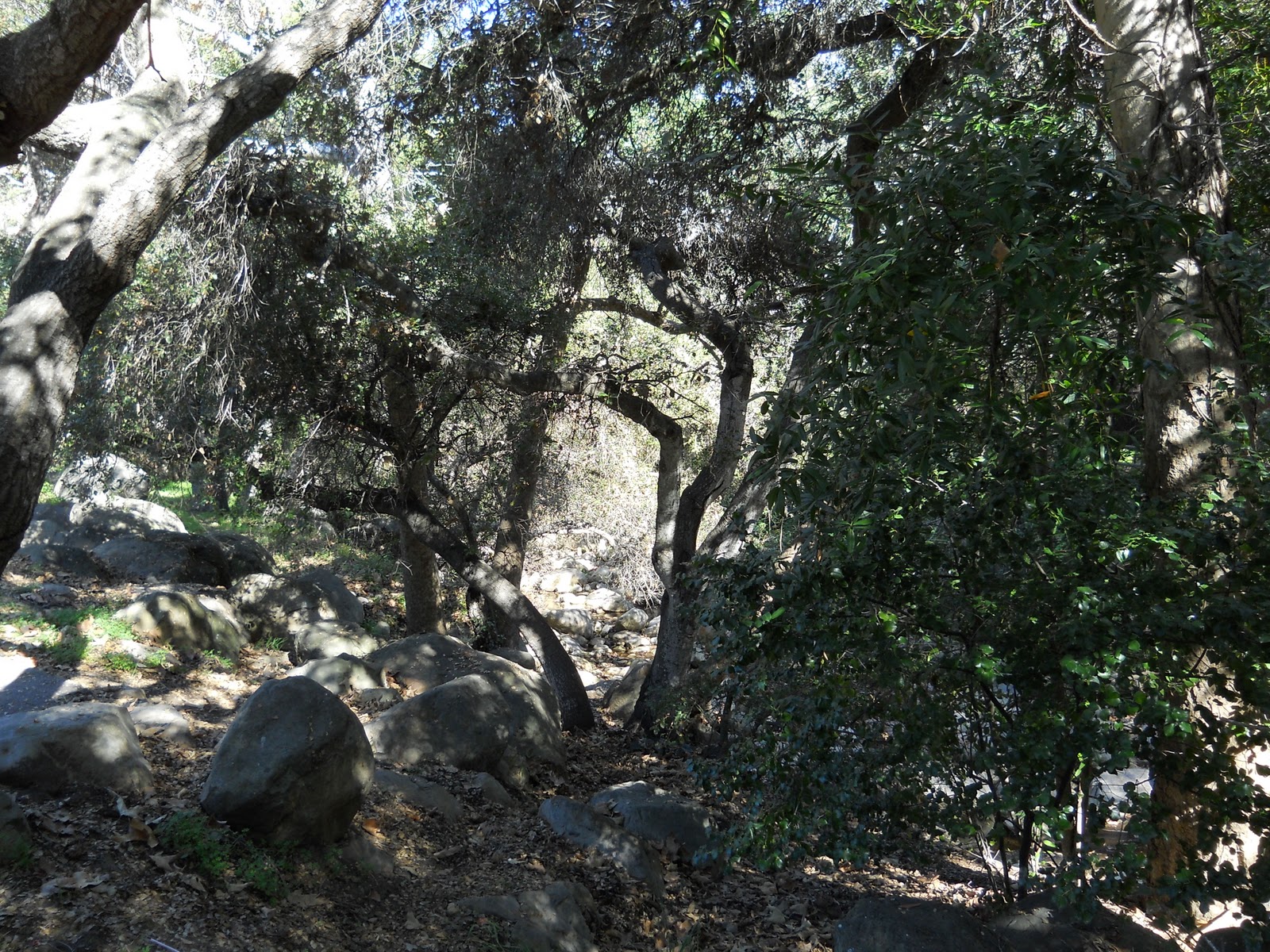

They all seemed to be down at East Beach and Henry's Beach at 'the Palms'.


It was time for me to head back home.  My father was doing well and I missed my wife.  I also longed to see some snow.  Today, as I write this, there is a steady snowfall in Bellingham.

Saturday, January 7, 2012

Restoration Trails, Healing Totems, and the Lummi Nation

2012 has arrived and with it, thoughts of renewal.  I'm writing something a little different this time:  three true stories that all point toward ecological and cultural renewal.  If you are from this part of Washington State, you won't be surprized to see each of these accounts is accompanied by totems made by First Nation peoples.

On June 10, 1999, the Olympic Pipe Line burst in Whatcom Creek, spilling 277,200 gallons of gasoline into the waters and exploding in a fireball and a river of fire that reached 2,000 degrees Fahrenheit.  Three boys lost their lives.  One was fly fishing at the time.  The fire left a mile of forested creek bed devastated.
press photo by Bill Pifer

Community action led to tougher laws and a finding of criminal negligence against the corporations involved, but healing still had to occur.  The creek bed had to be brought to life again.  Natural bends and oxbows were reestablished in the previosly channeled waterway.  Log riprap was anchored to the creek sides to encourage salmon to return.  The burned inclines on each side of the creek, were replanted with native shrubs and trees, but still there was the grieving of the community, who lost three youths: Liam Wood (18), Wade King (10), and Stephen Tsiorvas (10).

Lummi Healing Totem

Carver Jewel Praying Wolf James and the House of Tears carver guild of the Lummi Nation set up this totem to commemorate the three young men.  This area is now a park.

As I walk along the Red-Tail Restoration Trail by Whatcom Creek, I can see signs of ecological succession:  the regrowing of a biologic community.


There are Pileated Woodpeckers.


There are Red-Tailed Hawks.


And toward the bay, there are now salmon runs.  This leads to the second story of renewal.  I have been told that sixty years ago, no salmon returned to spawn.  The creek was in a sense dead.


With the help of the Bellingham Technical College, the cooperation of local fishermen, and a group that is restoring Salmon on local rivers, salmon are again making yearly runs in Whatcom Creek.  This particular salmon is being taken into one of the holding ponds of a fish hatchery, where the milt (sperm) and eggs will start a new generation that will spend its life at sea, before returning.


This salmon was part of a fisherman's catch.  All salmon fishing in the creek is monitored by the Bellingham Technical College, which also runs the hatchery.  Catch limits are set and enforced so that there is no overfishing.

This part of Whatcom Creek from the bay to the first falls is called Maritime Heritage Park and its trail is called the Salmon Art Trail.  Again, you can see totems.  To me, they are a sign of human commitment to Whatcom Creek's restoration.

My third story has to do with ecological education on the Lummi Reservation, at the Northwest Indian College.  Recently, the college, which was originally a fisheries school, established a Bachelor's degree in Biology.  Along with the standard biology classes, the first nation students take classes that teach the Salish Indian viewpoint of nature - their traditions, as it relates to nature and the stewardship of nature.  Salish Indians include a large group of related tribes in the Pacific Northwest, including the Lummis.  A new generation of native americans is being given the opportunity to become ecologists.  

Totem Carver at the Lummi Stomish, a yearly tribal festival

Happy New Year!


Friday, December 30, 2011

Snowy Owls and a Rough-Legged Hawk

SNOWY OWL
Sandy Point, December 27

After Christmas, I was itching to get outside and look for birds.  David Drummond and I headed for Sandy Point, on the Lummi Indian Reservation, to look for Snowy Owls.  David is a biologist and the head researcher/ornithologist at the Merlin Falcon Foundation.  With his level of expertise, I did the driving and he did the spotting. 

On the way, we passed a Red-Tailed Hawk every half kilometer and a Bald Eagle, every kilometer.  Interestingly, we saw two Red-Tails patrolling a field together (and last week I saw eagle pairs).  The days are getting longer and pre-mating season pairings are already occuring.

When we arrived at Sandy Point, there was a wet, cool wind blowing from the South, the kind that brings rain at this lower elevation and snow to the nearby Cascades. Sandy Point is a peninsula, dividing  Lummi Bay from the Georgia Straight.  Driving on it, you see a beach strand, built up with houses that face the San Juan Islands.   

Our first sign of 'owl' was when David spotted the clipped, grey wing of a small passerine, about the size and color of a Junco or sparrow.  Shortly after that he saw this owl (above), using a chimney to shelter from the wind.  I was happy.  I had spent four years feeding a Snowy Owl at a raptor 'rehab' center, who was blinded in one eye, but this was a healthy FREE owl.


Our first concern, of course, was to observe without disturbing.  This Snowy Owl had just made an epic migration from Northern Alaska to Bellingham, from latitude 70 degrees to 48 degrees!  This would be equivalent to flying from Seattle to Baja California.  It will be calorie depleted and need rest.  What it doesn't need is to be stressed by people with binoculars, getting too close.  David and I watched from my vehicle and then carefully set up a spotting scope behind it.  We minimized noise and our presence.  The owl closed its eyes frequently and even tucked its head occasionally.


Females and immature males have quite a bit of barring.  Adult males lose this coloration.  The half-blind owl I helped take care of was a male, almost totally white.  The eyes are yellow.  The feathering covers the feet, a good adaptation in snow country.  One thing I have noticed about 'snowies' is that they are almost always silent.  Only twice, in four years did I hear the male vocalize and that was during mating season.  Frankly, I am glad it was usually silent.  The cry was so piercing it almost hurt my ears.


As we left this owl to rest, I spotted a second Snowy Owl on a roof top facing a boat canal.  We remarked on what a great area this was for winter feeding.  The small residential area was surrounded by shoreline, estuary, marsh, meadow, and small gardens.  This area has a variety of small rodents, song birds, shore birds, fish, and the occasional Garter Snake... a broad buffet for a hungry winter migrant.

Driving out of the Lummi Nation, David asked me to pull off the road.  He had spotted a Rough-Legged Hawk.  We watched it hover hunt over a field of Reed Canary Grass.  The hawk stooped (dove) and caught a Townsend's Meadow Mouse, then flew to a perch in a willow tree.  It ate the mouse in three bites and cleaned its beak.  What a great day!

Wednesday, December 14, 2011

Living on the Edge: Ecotones and Animals

At this place, one of our forested mountains meets farmland, a fresh-water stream, and a salt water bay.  On November 5th, I stood here, where four of these different habitats come together.  I was overwhelmed by the richness of life.  In ten minutes, in my immediate vicinity, I saw a Stellar Jay, a Red-Tailed Hawk, a Peregrine Falcon,  a Great-Blue Heron, and a Bald Eagle (who happened to catch some unidentified, aquatic creature).  The hawk and falcon flew directly over my head, both from a nearby stand of Douglas Firs.  Looking out on the bay, I saw at least one-half million ducks (mostly Northern Pintails and American Wigeons), rafting between Blanchard Mountain and Samish Island.  According to the man standing next to me, this was a conservative estimate.


ECOTONE:  WHERE DIFFERENT ECOSYSTEMS MEET

      Blanchard Mountain                               Skagit Farmland                               Samish Bay          

I was standing at an ECOTONE.  An ecotone is simply where two or more ecosystems or habitats come
in contact with each other.  It is a transition zone; an interface.  It can be the best of two worlds coming together or a clashing disharmony.  Some animals are ecotone lovers and some are ecotone haters.  Those that have evolved to exploit the resources of more than one habitat will fall into the first category.  Those species who avoid ecosystems may be limiting their evolutionary options as we humans change the environment.

This Great Blue Heron was fishing where the waters of a freshwater river and saltwater, Drayton Harbor mix.
Great Blue Heron


This Bufflehead and Belted-Kingfisher were at the same river-harbor-forest confluence where I saw the Great Blue Heron.
                         Bufflehead                                                                      Belted - Kingfisher

Bald Eagles are seen fishing in the salt-water bays, hunting salmon up the Nooksak and Skagit Rivers, and perched by our many lakes and ponds.  However, you'll also see them patrolling dairyfarms for placental afterbirth, and of course they scavenge dead calves.  They also steal food hunted by hawks.  While volunteering at Sardis Raptor Center, I had to rescue one unfortunate Red-Tail that got the worst of such an encounter.  He required stitches, but recovered and was later released. 
Adult Bald Eagle on Farmland
An Impressive Raptor who Exploits Several Habitats


A tidal shoreline is obviously an ecotone between land and water.  Birds that exploit the tidal zone fit into those adapted to this ecotone.  They include gulls and shorebirds, like this Black Oystercatcher and this   Glaucus-Winged Gull.
Immature Glaucus-Winged Gull
with a Mussel, at Semiahmoo


Two Black Oystercatchers at Semiahmoo
:
Humans can create ecotones where there were solid, unbroken ecosystems.  Within a short time, old-growth temperate forests can become a patch-work of logged meadows, old-growth forest, farms, and urban development.  Where they meet we see instant ecotones.


Some species retreat in the face of ecotones, like the Spotted Owl. They only succeed in
old-growth forests. Some very closely related species do well in ecotones...like the Barred Owl.  We are seeing this eco-drama being played out right now in Washington State.  The Spotted Owl is retreating into remaining old-growth forests.  The Barred Owl is moving into former, degraded habitats of the Spotted Owl.  While I have seen several Barred Owls in the 'wild' (Parks, Gold Courses, Rural properties), and one Spotted-Barred Hybrid in Custer, I have never seen a Spotted Owl.  The photo of this Spotted Owl is not my own, but a free domain download.   I wish you Happy Holidays!
            Spotted Owl                                                                              Barred Owl 

Tuesday, December 6, 2011

Fungi, the Forest Under the Forest

You may be wondering why I am devoting today's field notes to fungi, when I mostly have been reporting on birds.  Two reasons:
1.  All species in this Pacific Northwest, eco-region are interdependent.  As you will see below, even owls are connected to truffles!
 2.  Most of our region's birds and mammals are directly or indirectly dependent on forests...and without fungi, these forests would not exist.

Fungi and Red Cedar in association

Before I go further, I need to make a disclaimer and an apology to anyone from the Bellingham Mushroom Club.  I am a novice at identifying mushrooms.  There are mushrooms that look so similar that they can only be distinguished by studying the spores under a microscope or by their bruise patterns.  That is why the identifications, below, are tentative.  I do not wildcraft (gather for eating) mushrooms, as even a small mistake can be fatal.

STROPHARIA, but what species?
poisonous or edible?


Still, I hope that I can make some observations that might increase your own appreciation of the complexity of our ecosystem:
1. Start noticing associations between species.  For instance, is a certain type of mushroom always found in association with a certain species of tree?
2. Ask the 5 Ws:     Who?  (Who's been nibbling on the mushroom?)
                              What?  (What kind of fungus is it?)
                              Where? (Is it on a fallen log?  Growing under a Birch?  on a conifer?)
                              When?  (When did you find it?  Time of year?  Weather conditions?)
                               Why?  (Why do Birches decay so quickly?)

LEPIOTA
possibly, Lepiota rachodes
Shaggy Parasol, Growing Under Red Cedars

The watercolor sketches of mushrooms are from one of my field notebooks.  I was inspired by Beatrix Potter's work... no, not Peter Rabbit.  Beatrix Potter was a formidable mycologist (one who studies fungi) and she illustrated her discoveries with watercolors.  I find sketches help me better observe.

RUSSULA
 Russula, a gill mushroom
growing under Douglas Firs

Nearly all plants on earth depend on fungi, including the mushrooms.  The oldest fossils of land plants, from 450 million years ago, show symbiotic fungal structures.  Fungi act as rootlets, vascular systems, and immune systems for plants in a symbiotic system called the mycorrhiza.  Trees would not exist without fungi.

Here in the Pacific Northwest, the flying squirrel, Spotted Owl, and conifers are linked together by the Truffle, an underground 'mushroom'.  Here's how the mycorrhizal system works:  Conifers use the fungal mat of the truffle as root hairs.  This is how the trees absorb water.  Inside the truffles are nitrogen fixing bacteria that help fertilize the trees.  The flying squirrel seeks out the truffle as its favorite food.  It eats the truffle, incubates the spores, and spreads them through the forest.  The Spotted Owl, of course, eats the squirrels, and also helps spread the spores, while controlling the squirrel population.  

Boletus, showing signs of being eaten by slugs
I have also seen boletes eaten by squirrels.

 Boletus
possibly Boletus mirabilis
'Admirable Bolete', a 'tube mushroom'

Decomposition is also part of the cycle of forest life.  Bracket fungi help recycle trees and return them to the soil.
Bracket Fungi, a polypore
Pore Fungi
also known as Bracket Fungi

Lichens are a symbiotic association of fungi and cyanobacteria.  The 'green-blue' bacteria photosynthesize, turning sunlight, carbon dioxide, and water into sugar.  The fungi provides the home for the bacteria and gets the benefit of the sugar.  Some lichens also fix Nitrogen, which leaches into the forest floor and fertilizes the forest.
Lichen, the bluish-green growth on the tree bark


Perhaps the strangest fungi are the Slime Molds.  They can exist as separate Amoeba-like cells, scavenging microscopic life, but suddenly they congregate and form a body, like the one seen below.  Cells flow in this body, as if they were blood cells streaming.  Finally, they form a slug-like body and crawl to a place where they grow vegetative stalks and make spore capsules.  This is truly a bizarre creature that seems to act animal-like, protozoan-like, and fungi-like.
Slime Mold

I hope that this little tour of the Fungi Kingdom has helped you appreciate a world of life that is often overlooked.